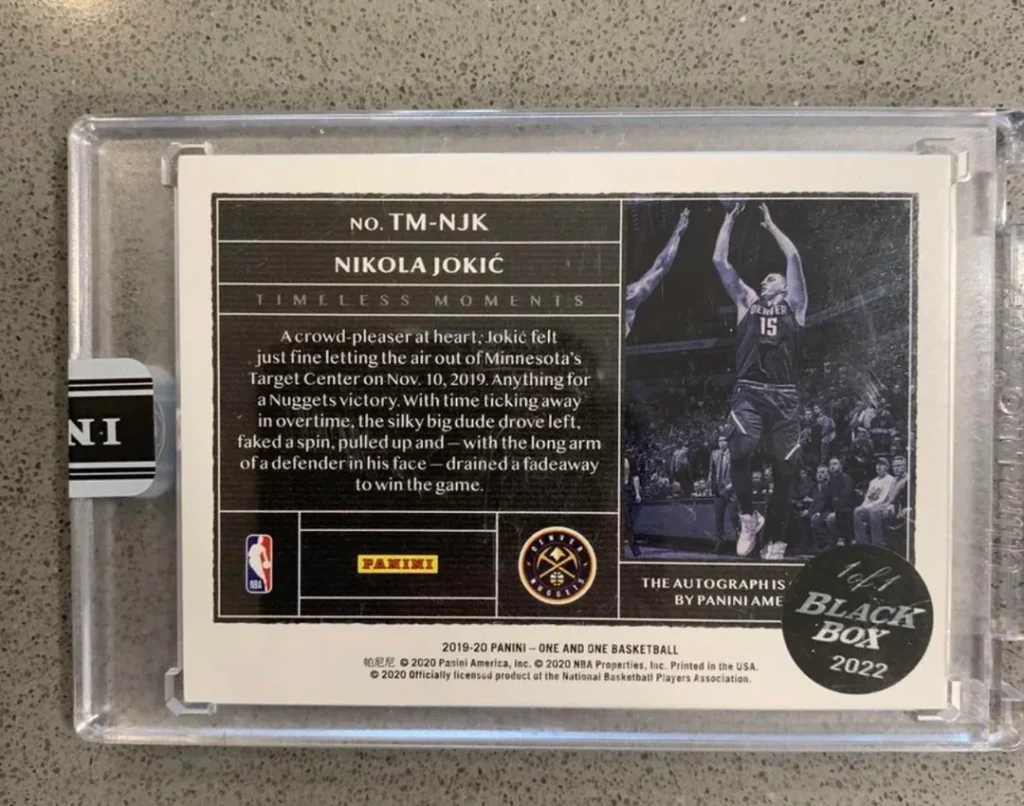
Collectors see “1/1” and instantly think grail-level rarity.
But there’s a big difference between a true 1/1 pulled from a product and a Black Box 1/1 issued by Panini.
Both are technically one-of-one cards, but they are not created or valued the same way.
Here’s what separates them.
What a True 1/1 Actually Is
A true 1/1 is the original one-of-a-kind card that was part of the base product design.
It was:
- Printed as part of the set
- Packed out in boxes
- Pulled by a collector
It is planned and cataloged as part of the product checklist.
When people refer to “the 1/1 from the set,” they mean this.
What a Black Box 1/1 Is
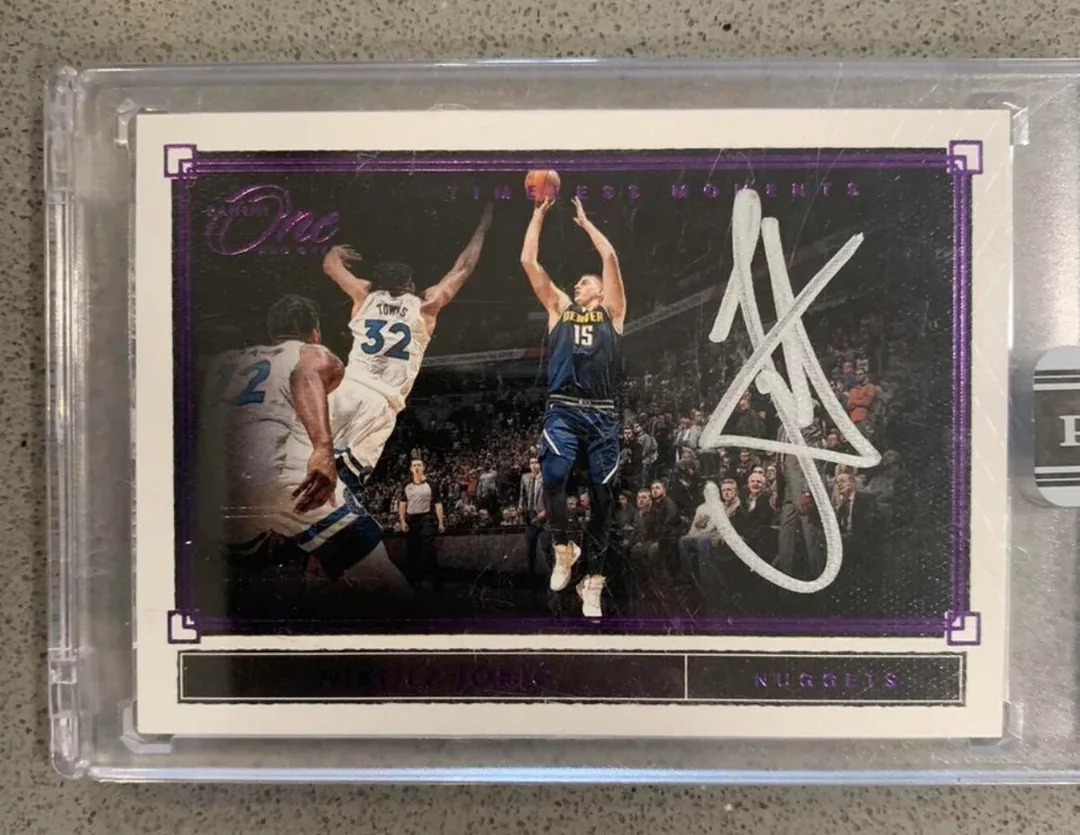
A Black Box 1/1 is issued after the product is released.
Panini uses them for:
- Customer redemptions
- Replacement cards
- Quality-control issues
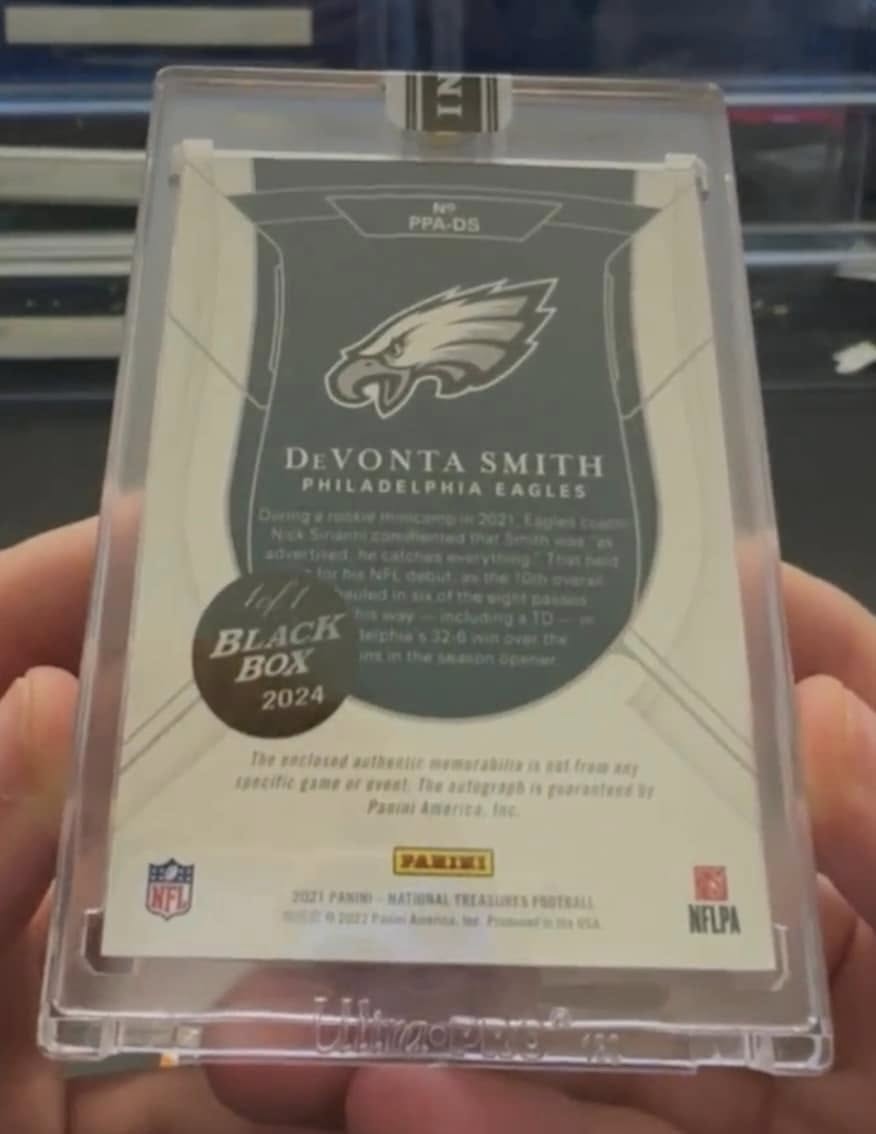
They take leftover autographs, memorabilia pieces or unfinished cards and encase them with:
- A Black Box seal
- A “1/1” stamp
- A clear label
The result is a one-of-one card that wasn’t originally inserted into packs.
Key Differences
Origin
True 1/1:
Designed as part of the set from day one.
Black Box 1/1:
Created later as a replacement or redemption solution.
Checklist Status
True 1/1:
Appears on the product checklist.
Black Box 1/1:
Not part of the official checklist.
Production Intent
True 1/1:
Produced on purpose for the release.
Black Box 1/1:
Produced later from extra assets.
Market Perception
True 1/1:
Collectors see them as the flagship card of that player’s run.
Black Box 1/1:
Still collectible, still rare, but often valued differently.
Which Is Worth More?
In most cases, the true 1/1 sells higher.
Collectors place more importance on:
- Original pack-pulled rarity
- Presence in the checklist
- Card’s direct link to the main product
Black Box 1/1 cards can still sell for strong prices, especially with elite players or iconic images, but they are not viewed quite the same.
Why Black Box Cards Still Matter
They often use stunning images or premium autograph pieces.
They can be cheaper ways to land rare cards of big names.
They’re legitimate collectible items, not fakes or knockoffs.
They just occupy a different lane in the hobby.
So Which Should You Buy?
If you care about set completion, checklist relevance and long-term premium value, the true 1/1 is the better target.
If you want a unique, authenticated, premium card at a potentially friendlier price, a Black Box 1/1 can be a great move.
FAQ
Is a Black Box 1/1 fake?
No. It’s a legitimate Panini-issued card, just not part of the original production plan.
Does a Black Box 1/1 count as a player’s rookie 1/1?
It can feature a rookie-year autograph or image, but most collectors don’t treat it as the true rookie 1/1.
Can Black Box cards hold value long-term?
Yes. Especially rare players, incredible imagery or key moments still hold strong demand.
Why do people get confused?
Because both say “1/1” — but how they became a 1/1 is completely different.